- The 2026 High-Level Political Forum on Sustainable Development (HLPF) marked another important step towards advancing LGBTIacronym for lesbian, gay, bisexual, trans and intersex people. Although this is not the acronym available to describe people of diverse sexual orientations, gender identities and expressions, and sex characteristics, it is the most commonly used in United Nations spaces and advocacy. More inclusion in the implementation of the 2030 Agenda.
- Together with partners, ILGA World advocated for development that is transformative, equitable and inclusive.
- Progress on the Sustainable Development Goals is essential to advancing the rights, safety and wellbeing of LGBTI communities worldwide.
The 2026 High-Level Political Forum on Sustainable Development (HLPF) marked another important milestone in advancing LGBTI inclusion within the implementation of the 2030 Agenda.
This year’s Forum reviewed SDGs 6 (Clean Water and Sanitation), 7 (Affordable and Clean Energy), 9 (Industry, Innovation and Infrastructure), 11 (Sustainable Cities and Communities), and 17 (Partnerships for the Goals) under the overarching theme of “Transformative, equitable, innovative and coordinated actions for the 2030 Agenda.“ These goals represent concrete development commitments for LGBTI communities: they shape everyday realities and determine access to housing, employment, healthcare, public services, infrastructure, safety, participation and dignity.
ILGA World has been working in close coordination with the LGBTI Stakeholder Group, Outright International, RFSL and COC Nederland to strengthen LGBTI civil society engagement throughout the Forum. The UN LGBTI Stakeholder Group Secretariat, Tania Sanchis Gimenez, coordinated monthly global consultations across all regions, facilitated the drafting of joint advocacy positions, supported activists engaging with the HLPF process, convened strategic exchanges with UN partners and member States, and led preparations for the Group’s participation in the Forum.
Building on several months of these coordination efforts, ILGA World and its Advocacy Senior Specialist Guillermo Ricalde also supported the participation of human rights defenders from the Global South and contributed to the drafting of the 2026 LGBTI Stakeholder Group position paper.
Strengthening LGBTI voices within the High-Level Political Forum
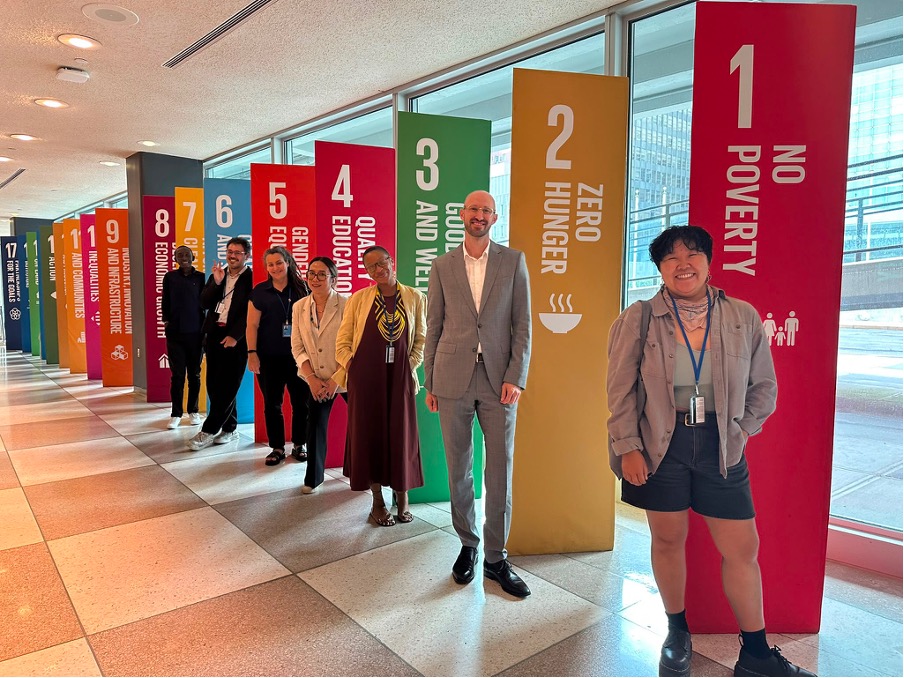
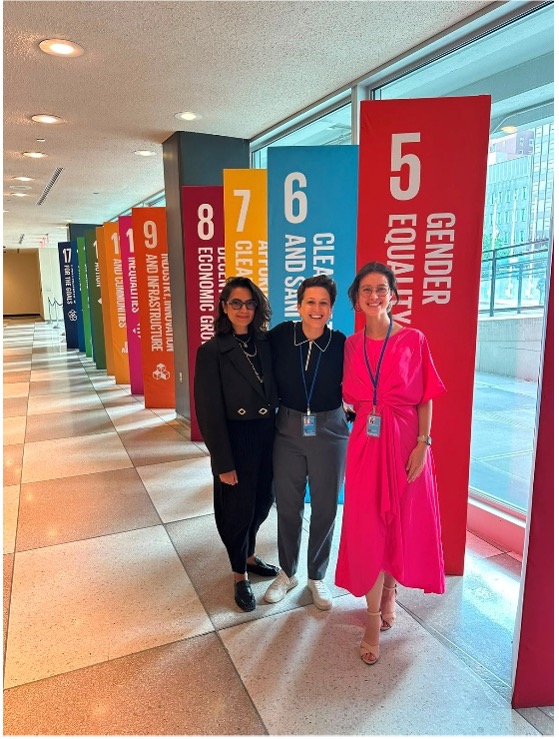
Throughout the week, members of the LGBTI Stakeholder Group engaged with UN agencies, Member States diplomatic missions, Major Groups and Other Stakeholders (MGoS), and civil society organisations through official sessions, bilateral meetings and strategic coordination.
Tania Sanchis Giménez, UN LGBTI Stakeholder Group Secretariat reflected:
“HLPF is only one week on the UN calendar, but meaningful participation is built throughout the year. My role as Secretariat is to connect organisations and activists across regions, create space for collective advocacy, and ensure that diverse LGBTIQ+ voices are reflected in global sustainable development discussions. This year’s HLPF showed that when communities work together, our influence is stronger than any single organisation acting alone.”
Tania Sanchis Giménez
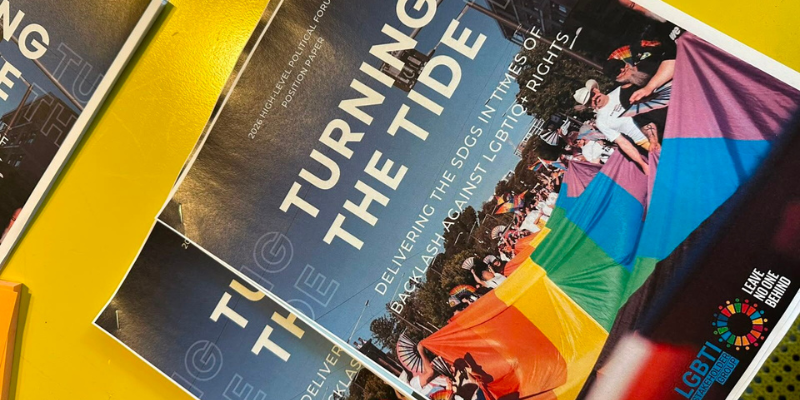
A central advocacy tool throughout the Forum was the 2026 position paper, Turning the Tide: Delivering the SDGs in Times of Backlash Against LGBTIQ+ Rights. Developed collectively by the LGBTI Stakeholder Group, the paper documents how shrinking civic space, anti-rights movements and structural discriminationunequal or unfair treatment which can be based on a range of grounds - such as age, ethnic background, disability, and diverse sexual orientations, gender identities and expressions or sex characteristics, amongst others. More continue to undermine progress across the Sustainable Development Goals, while proposing concrete recommendations to ensure that implementation of the 2030 Agenda genuinely leaves no one behind.
In the words of Nhuun Yodmuang, one of the defenders whom ILGA World supported
“It was a good opportunity to contribute to the drafting of the 2026 position paper alongside colleagues from across the LGBTI Stakeholder Group. I am especially grateful to the leadership of the LGBTI Stakeholder Group and to partners, including Young Pride Club, whose collaboration made this collective effort possible. Bringing perspectives from Asia and the Pacific into the paper was particularly important, as communities in our region face distinct challenges shaped by diverse legal systems, economic realities, and climate vulnerabilities. Beyond informing advocacy at the HLPF, the position paper provides a shared foundation that helps align priorities across stakeholder groups and strengthens our collective voice in engaging with governments and the UN system”
Nhuun Yodmuang
Bringing lived realities into official United Nations discussions
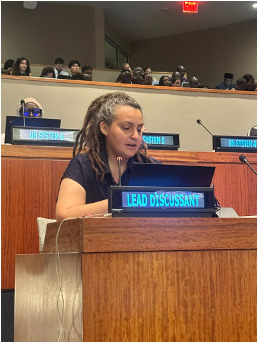
One of the highlights of the week was the participation of LGBTI activists as lead discussants during official HLPF sessions.
Denisse Yanil Cufré, speaking on behalf of both the LGBTI Stakeholder Group and during the official MGoS session on stakeholder engagement, highlighted that participation itself remains unequal. Through the story of an Argentine lesbianadjective/noun to describe a woman whose enduring physical, romantic, and/or emotional attraction is to other women. Women and non-binary people may use this term to describe themselves. More attempting to participate in policymaking while balancing paid and unpaid care work, Denisse, program manager at Conectando Derechos, illustrated how structural inequality determines who is able to influence public decisions.
“It was a tremendous privilege to share Argentina’s reality – particularly for LBTI women -, which is reflected throughout the entire region. We are approaching 2030, and there is still much to be done. We are witnessing a rollback of our rights, a rise in hate speechany kind of communication in speech, writing or behaviour that attacks or uses
Denisse Yanil Cufré
pejorative or discriminatory language with reference to a person or a group on the basis of who
they are – including on the grounds of their gender, sexual orientation, gender identity and
expression, or sex characteristics amongst others. More and hate crimes, and the erosion of democratic participation, just as discussions about post-SDG commitments are set to begin. Serving as the lead discussant on this panel gave me the opportunity to advocate for the genuine inclusion of LGBTI people in the development agenda, based on the clear understanding that this is not incompatible with respect for human rights, nor can it undermine it.”
From commitment to reality: LGBTI inclusion in the 2030 Agenda
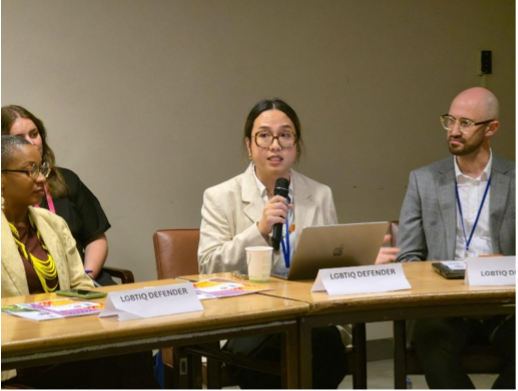
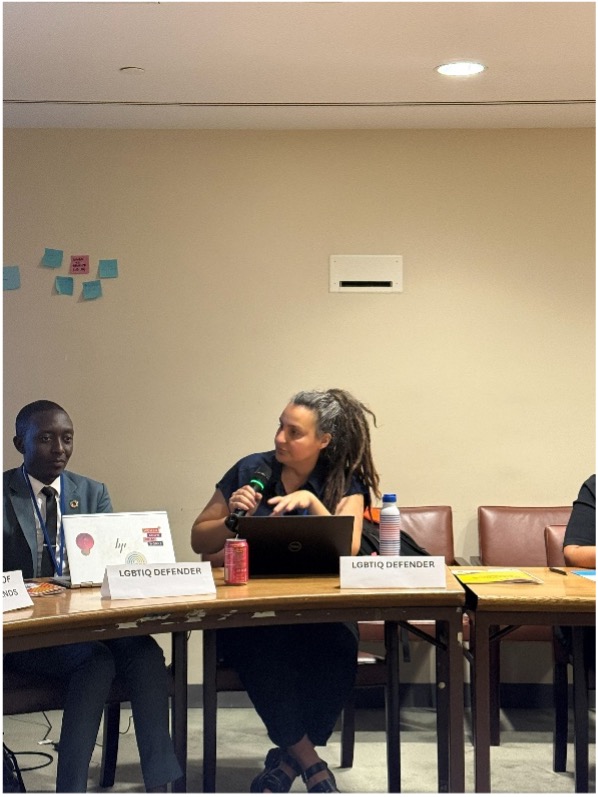
The LGBTI Stakeholder Group also organised the side event “From commitment to reality: LGBTI inclusion in the 2030 Agenda,” co-sponsored by the Governments of Spain, Norway and the Netherlands, alongside UN Women and UNDP.
The event brought together governments, UN agencies and activists to explore practical pathways for embedding LGBTI inclusion across the SDGs under review.
Nhuun Yodmuang:
“I was glad to speak on this panel and grateful for the support of the LGBTI Stakeholder Group in creating the space, and of member States in bringing these perspectives into the broader discussions. My key point was that achieving the SDGs requires addressing the systemic political, legal, and economic barriers that continue to exclude LGBTIQ+ communities. At the same time, many countries in the Global South are navigating debt, climate crises, and shrinking fiscal space, and should not have to choose between economic development and advancing genderrefers to a social construct which places cultural and social expectations on individuals based on their assigned sex. More equality and human rights. This is why equitable partnerships, with LGBTIQ+ and other marginalized communities recognised as equal partners rather than simply beneficiaries, are more important than ever.”
Nhuun Yodmuang
“The side event organised by the LGBTI SG was of great significance, supported by highly prominent co-sponsors and attracting considerable interest and participation from the audience. During my presentation, I reviewed specific commitments made by the governments participating in the panel (Norway, Thailand and the Netherlands) and I shared a cautionary example based on the case of Argentina, which between 2017 and 2022 incorporated LGBTIQ+ policies into its Voluntary National Review, but in 2024 removed all references to the SDGs, climate change, gender equality and LGBTI rights. That is why I emphasised the importance of creating lasting change and structures, such as ensuring that disaggregated data is compiled with the communities, institutionalising participation so that it does not depend on the government and seeking coherence and dialogue between development and human rights policies through an intersectional approach.”
Denisse Cufré
Looking ahead
Although less than five years remain until the conclusion of the 2030 Agenda, HLPF 2026 reaffirmed that there is still significant space to influence implementation and shape discussions on what comes next.
Building on this year’s engagement, ILGA World will strengthen its work on sustainable development through several immediate priorities:
- Continue supporting LGBTI advocates from the Global South to participate meaningfully in future HLPF sessions and related UN development processes
- Strengthen collaboration with the LGBTI Stakeholder Group, UNDP, UN Women and Member States committed to advancing inclusive, sustainable development
- Promote stronger integration of SOGIESCabbreviation standing for sexual orientation and gender identity & expression, and sex characteristics. More perspectives within Voluntary National Reviews, SDG indicators, and national implementation frameworks
- Build on the momentum generated during HLPF 2026 to ensure that LGBTI communities contribute to emerging discussions on the post-2030 development agenda and the future of inclusive multilateralism, including the UN80 process
- Continue demonstrating that sustainable development and human rights are mutually reinforcing agendas, where participation, equality and accountability remain essential conditions for leaving no one behind.