Summary
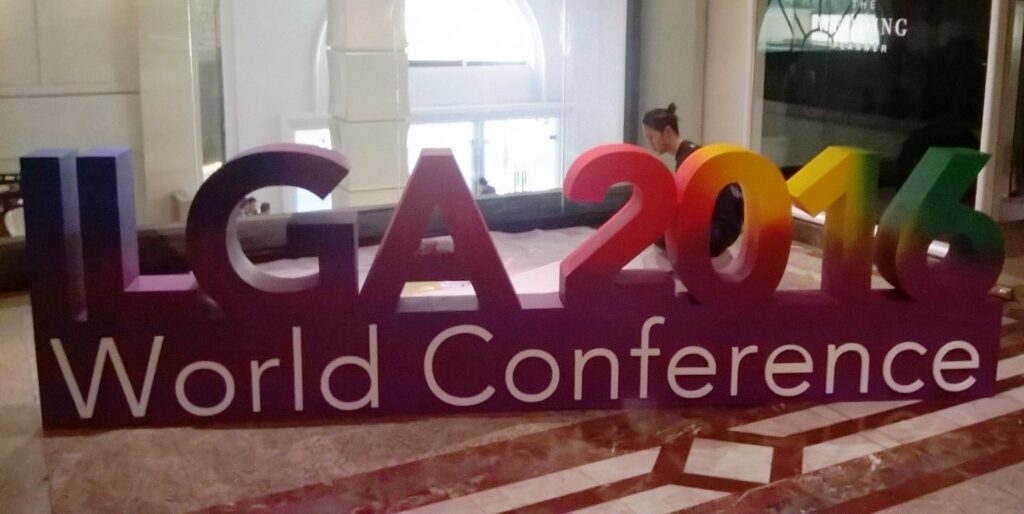
For five days, advocates from all over the world met to network and engage in dialogue on issues faced by lesbianadjective/noun to describe a woman whose enduring physical, romantic, and/or emotional attraction is to other women. Women and non-binary people may use this term to describe themselves. More, gayadjective to describe people whose enduring physical, romantic, and/ or emotional
attractions are to people of the same gender. Men, women and non-binary people may use this
term to describe themselves. More, bisexualadjective used to describe a person who has the capacity to form enduring physical, romantic, and/ or emotional attractions to those of the same gender or to those of other genders. More, transadjective/umbrella term to describe a person whose gender identity does not match the sex they were assigned at birth. More and intersexan umbrella term for the spectrum of variations of sex characteristics that naturally occur within the human species. Intersex people are born with variations of sex characteristics (such as genitals, reproductive organs, hormonal and chromosomal patterns) that are more diverse than stereotypical definitions of male or female bodies. Up to 1.7% of the global population are born with such traits; yet, because their bodies are seen as different, intersex children and adults are often stigmatised and subject to harmful practices – including in medical settings - and discriminated against. More communities both at the local and at the international level, to take stock of the many groundbreaking moments celebrated in the past few years and to strategize about the future of these movements.
The International Lesbian, Gay, Bisexual, Trans and Intersex Association (ILGA) has held its World Conferences since its early days, in 1978: almost 40 years later, the organisation enjoys consultative status at the United Nationsan international organisation comprising 193 member States. It has the mission of maintaining peace and security, protecting human rights, providing humanitarian aid and ensuring economic and social development across the globe. It is a network of many different bodies and agencies, each of which has a particular role and responsibility. More, where it speaks and lobbies on behalf of over 1,200 member organisations from 131 countries.
“Let numbers speak for themselves: it has been, by far, our biggest conference to date, and a detailed snapshot of a truly global and diverse movement” commented Ruth Baldacchino and Helen Kennedy, co-Secretaries General at ILGA. “All around the world, resilient communities continue to challenge systems, practices and norms that target and exclude LGBTI people, and it’s important for them to remember that they are not alone in their struggle. Events like the ILGA World Conference represent empowering occasions where people fighting injustices can come together, reflect and discuss on ways to shape a world in which everyone can live safely, equally and free.”
With nine Pre-Conferences, 20 Rainbow Talks and 25 workshops on topics ranging from trans perspectives on the International Classification of Diseases to the economic cost of social exclusion for LGBTIacronym for lesbian, gay, bisexual, trans and intersex people. Although this is not the acronym available to describe people of diverse sexual orientations, gender identities and expressions, and sex characteristics, it is the most commonly used in United Nations spaces and advocacy. More communities, the five days of the conference have indeed been a busy time for the hundreds of human rights defenders involved.
“Such a huge event would not have been possible without the efforts of the local hosts organisations, Rainbow Sky Association of Thailand and Purple Sky Network, and the 120 volunteers who have assisted ILGA and every participant,” said Renato Sabbadini, Executive Director at ILGA. “We want to thank them immensely for their invaluable work.”
ILGA conferences are also the place where members and allies of the only global federation of LGBTI organisations elect their representatives. During the conference in Bangkok, both Ruth Baldacchino and Helen Kennedy were confirmed as co-Secretaries General for two more years, while the Executive Board was expanded to include also the representative of the first-ever Bisexual Secretariat created within ILGA. “This new body,” claim Baldacchino and Kennedy, “will be crucial to better address the issues faced by bisexual people, and also to increase bisexual visibility both within and outside the global LGBTI movement.”
Along with the establishment of the Bisexual Secretariat, and a Bisexual Pre-Conference held along with the ones dedicated to Women, Trans and Intersex persons, the 28th ILGA World Conference marked more firsts. A new format – short presentations named Rainbow Talks – officially made its successful debut. Conference participants were offered a mobile app to guide them through the conference programme, plan their sessions and network with other attendees. Topics like sexrefers to the classification of a person as male, female, or other - usually made at birth, written on a birth certificate, and usually based on the appearance of their external anatomy. A person’s sex, however, is actually a combination of bodily characteristics, including chromosomes, hormones, internal and external reproductive organs, and secondary sex characteristics. More work, the struggles of LGBTI refugees and migrants, and indigenous communities were addressed for the first time in the organisation’s gatherings.
Furthermore, the conference hosted one of the first public appearances of Prof. Vitit Muntarbhorn as the first-ever UN Independent Expert on Sexual Orientation and Gender Identityabbreviated form to refer to the IESOGI – a UN Special Procedures mandate specifically dedicated to addressing violence and discrimination based on sexual orientation and gender identity. More (SOGIabbreviation standing for sexual orientation and gender identity More).
“I must thank profoundly the great work done by the vast number of non-governmental organisations, communities, governments and other actors worldwide to make the new mandate a reality,” Muntarbhorn said during a passionate keynote speech. “(They) give voice to our global message: Treat people decently, respectfully, kindly, humanely whatever their origins, our origins.”
Before meeting several human rights defenders, engaging in an extensive Q&A session about his recently upheld mandate and taking part in a reception to celebrate the 10th anniversary of the Yogyakarta Principles, the UN Independent Expert on SOGI also outlined some linchpins for the movement to plan its future actions, calling for “decriminalization, depathologization, status recognition, gender-diverse cultural inclusion, and ‘empathization’” in front of an enthusiastic crowd.
Many challenges lie ahead for the LGBTI movement worldwide, and it will be two years until the global community will gather again and take stock. The next ILGA World Conference is set to take place in 2018 in Te Whanga-nui-a-Tara / Wellington, as a collaborative bid of three major Aotearoa / New Zealand LGBTI organisations (Intersex Trust Aotearoa New Zealand, Tiwhanawhana Trust, and Rainbow Youth) has successfully won the bid to host what already looks like an historic event. In fact, not only will the 2018 ILGA World Conference to be held in Oceania, but it will also be an occasion to celebrate ILGA’s 40th anniversary.
“The fact that the first ILGA World Conference in Oceania will coincide with ILGA’s 40th anniversary, at the antipodes of its origin [Coventry, UK], cannot be overstated,” Sabbadini commented. “It is not only a testament to the incredible growth of ILGA World in the last four decades, but also to its genuine ability to embrace all cultures and let its own spirit be shaped by them.”