Summary
Some of my friends are gayadjective to describe people whose enduring physical, romantic, and/ or emotional
attractions are to people of the same gender. Men, women and non-binary people may use this
term to describe themselves. More
by Mitchell Hung
Published on The Economist on October 24, 2016
Big differences exist around the world in attitudes to LGBT people. That is widely known. But according to a new survey there are also big differences in whether people think they know LGBT people. These differences are highly correlated with what people say about pro-LGBT policies, suggesting if nothing else that as knowledge grows of actual gay, lesbianadjective/noun to describe a woman whose enduring physical, romantic, and/or emotional attraction is to other women. Women and non-binary people may use this term to describe themselves. More, bisexualadjective used to describe a person who has the capacity to form enduring physical, romantic, and/ or emotional attractions to those of the same gender or to those of other genders. More or transgender people in your community, as family, friends or neighbours, attitudes improve toward such people.
The new report,“The personal and the political: attitudes to LGBTI people around the world,” was written by the International Lesbian, Gay, Bisexual, Transadjective/umbrella term to describe a person whose gender identity does not match the sex they were assigned at birth. More and Intersexan umbrella term for the spectrum of variations of sex characteristics that naturally occur within the human species. Intersex people are born with variations of sex characteristics (such as genitals, reproductive organs, hormonal and chromosomal patterns) that are more diverse than stereotypical definitions of male or female bodies. Up to 1.7% of the global population are born with such traits; yet, because their bodies are seen as different, intersex children and adults are often stigmatised and subject to harmful practices – including in medical settings - and discriminated against. More Association (ILGA) and RIWI, a polling company. It charts sharp regional differences in response to questions ranging from do you agree that “Same-sex desire is a Western World phenomenon” and that “Being gay, lesbian, bisexual, transgender, or intersex should be a crime” to “Do you personally know someone who does not identify with the sexrefers to the classification of a person as male, female, or other - usually made at birth, written on a birth certificate, and usually based on the appearance of their external anatomy. A person’s sex, however, is actually a combination of bodily characteristics, including chromosomes, hormones, internal and external reproductive organs, and secondary sex characteristics. More they were assigned at birth, or who identifies as transgender?” and “How would you feel if your neighbour were gay or lesbian?”. Overall, the responses were not quite as negative as the researchers had predicted, though the data show that fiercely anti-LGBT attitudes persist in large parts of the world.
Continue reading the article: click here
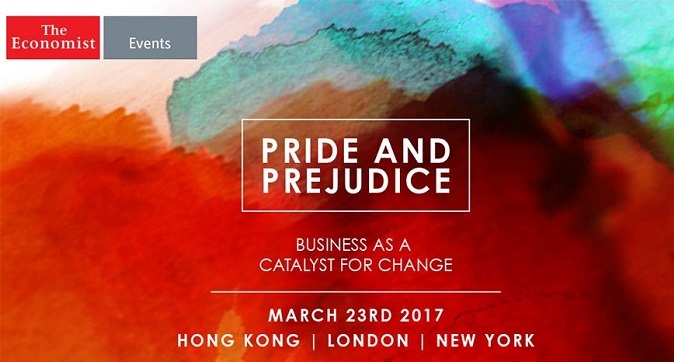
ILGA supports Pride and Prejudice, a global initiative organised by The Economist Events that will catalyse fresh debate on the economic and human costs of discriminationunequal or unfair treatment which can be based on a range of grounds - such as age, ethnic background, disability, and diverse sexual orientations, gender identities and expressions or sex characteristics, amongst others. More against the LGBTIacronym for lesbian, gay, bisexual, trans and intersex people. Although this is not the acronym available to describe people of diverse sexual orientations, gender identities and expressions, and sex characteristics, it is the most commonly used in United Nations spaces and advocacy. More community. The 24-hour event taking place on March 23rd will begin in Hong Kong, continue in London and end in New York. ILGA member organisations can enter discount code ILGA/DC to save 20% off a pass to either the Hong Kong, London or New York events. Find out more about Pride and Prejudice here.